
I Have a Fetish for Rounded Corners
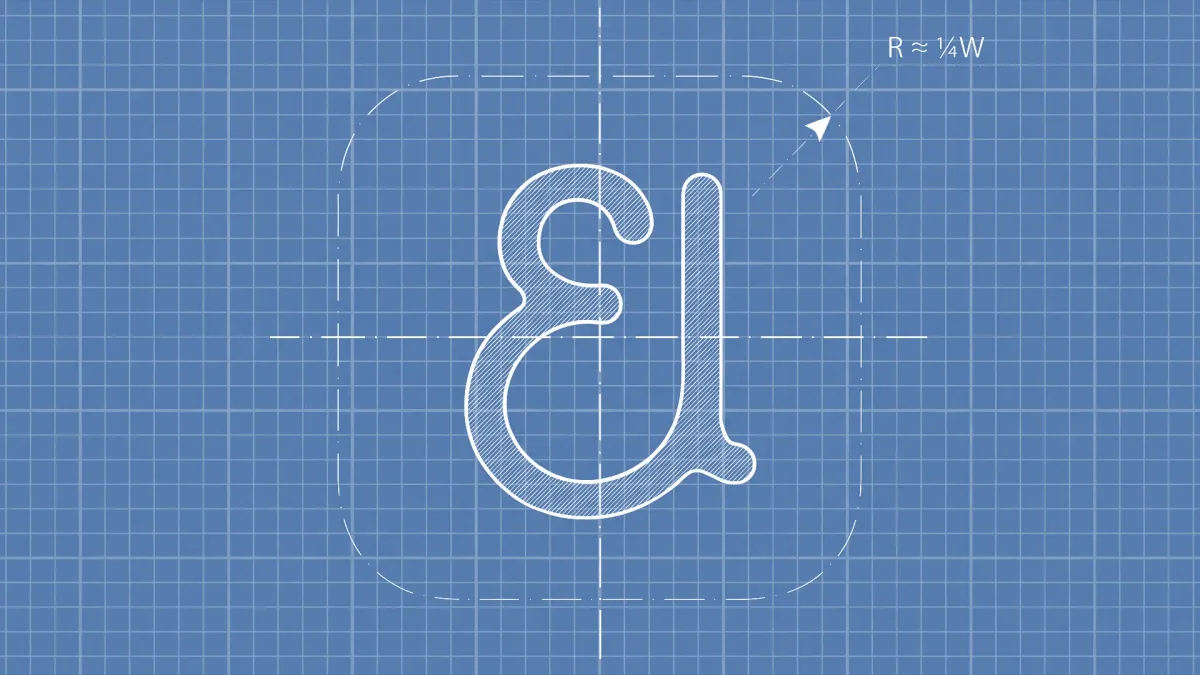
I've had a love affair with rounded corners for too many years.
Recently, I came across my first business card, which I had printed in 2011. It had, guess what, rounded corners. I remember hunting for a printing shop that could make them that way. Failing to find one in Egypt, I eventually ordered them from the UK. I cared enough about those four corners that I paid three times the cost just to get the cards shipped home.
Fifteen years later, I still love me some rounded corners and notice them everywhere. I find them inexplicably pleasing and calming. This made me wonder: why? And where did this little design convention of rounding off corners actually come from?
Apple certainly helped popularize and establish rounded corners as a modern UI paradigm, especially with the introduction of the iPhone, but Steve Jobs’s interest in them went back much further. In 1981, Bill Atkinson was working on the graphics system for the Apple Lisa when Jobs asked him whether it could draw rectangles with rounded corners.
Atkinson thought they were unnecessary, but Jobs disagreed and began pointing out rounded rectangles around the room. Jobs then took him on a walk around the neighborhood, and according to Atkinson, they found 17 rounded rectangles within three blocks, with a rounded no-parking sign finally convincing him. He returned to the office, added the capability, and called the new graphics primitive RoundRects.
At the turn of this century, Apple unveiled Mac OS X's Aqua interface, leaning heavily into soft, pill-like components. Then and there, rounded corners graduated from a graphics primitive to an Apple aesthetic. The introduction of the iPhone years later, with hardware that had rounded corners paired with similarly rounded software components, helped spread the design pattern into the mainstream. In 2013, Apple pushed the form further with the iOS 7 home-screen icons, replacing ordinary rounded rectangles with a smoother continuous-corner shape, often called a squircle. Its boundary begins bending more gradually, so it feels like one continuous shape rather than a rectangle with four circles pasted onto it.

But it wasn't just Apple. the whole internet followed suite and became round.
In the early 2000s, developers had to create rounded corners using separate little image files positioned over the corners of rectangular HTML elements. The W3C, the Internet standards body itself, showed how to use five separate images to simulate rounded corners, and it took years for that hack to become obsolete. And even though Apple added support for border-radius in WebKit in 2005, it wasn't until another decade for support to become consistent across major browsers. I remember those gap years, when it felt quite ugly to fake rounded corners with images, but quite tempting to do them anyway. But once the cost to implement rounded corners collapsed to nothing, the aesthetic proliferated.
Rounded corners themselves are ancient. Archaeologists have documented rectangular structures with rounded corners at a Syrian site dating back more than 10,000 years, where they appeared during a shift from circular buildings toward rectilinear ones. Rounded corners also appeared on ancient Egyptian objects thousands of years ago. The Met showcases a 5,000-year-old Egyptian stone makeup palette, used to grind mineral pigments for eye paint, and its rounded corners give it a pleasant modern aesthetic.
Sometimes these corners provide real engineering value. The de Havilland Comet was the world's first pressurized civilian aircraft and introduced an engineering challenge in which the fuselage would expand and contract under cabin pressurization. It made its commercial debut in 1952. Only two years later, two Comets crashed, killing everyone aboard. Investigators identified stress concentrations around the relatively squarish window corners as a contributing cause, having found that they fatigued the surrounding material and led to a rupture of the fuselage. So those rounded corners you sit next to when you are up in the air are not just for looks; they help keep you safe.
Coming back down to earth, rounding the corners keeps us safer on the ground too. Every new parent discovers the mundane version of the same principle: coffee-table corners hurt. Babyproofing our furniture wasn't what brought us rounded UI components, but it helped us establish the association between something rounded and something less threatening. A 1963 patent described sharp corners as a danger particularly to small children and proposed a soft, convex protective cap.
“There are no straight lines or sharp corners in nature.” — Antoni Gaudí
Economically, rounded corners sometimes cost more and sometimes less, depending on the material and manufacturing process. With CNC machining, for example, if you wanted to do sharp internal corners, the machinist may need a much smaller cutter, which removes material more slowly and can increase machining time and cost. On the other hand, for external edges, a smooth radius may require extra tooling or profiling, so a simple chamfer or untreated edge can be cheaper. But it's not just about the cost to round those corners. What is cheaper to manufacture can be more expensive to own. In a 1948 paper on commercial kitchen equipment, the author argued that rounded corners were easier and faster to clean than square ones, and that even if they cost more to construct initially, they would pay for themselves through lower operating costs.
Like Jobs said, rounded corners are everywhere, and they have been everywhere for a very long time.
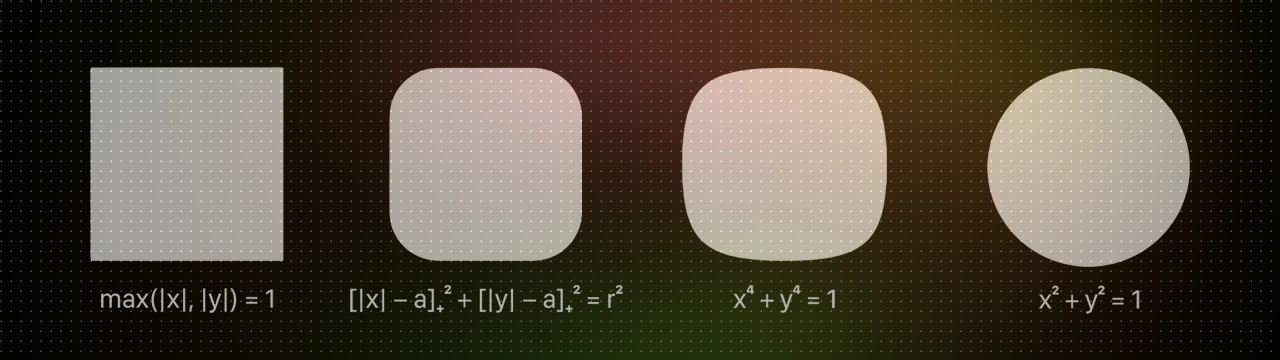
Apple took rounded corners further with iOS 26. Its Liquid Glass design made many interface elements rounder, while new concentric-corner APIs let nested shapes follow the curvature of their containers. The result visually echoes the rounded outlines of Apple’s devices. But this extra rounding has prompted at least some pushback. I don't like these exaggerated curves either. We were softening rectangles. Now they no longer feel like rectangles.
Apparently, I have a corner-radius limit.
So just in case you were wondering why my little corner on the Internet is called Elnahla’s Rounded Corner—now you know.