
AI Gave Me a Hobby With an Expiration Date
I spent over 200 hours making a 6-minute short film with AI. It was one of the most joyful experiences I’ve ever had, and it brought to life a filmmaking passion that had been buried inside me for more than 30 years. I expected finishing it to feel like the start of a new hobby, but I’m now wondering whether I caught a brief window in AI’s exponential progress, one that might be over before I have the opportunity to do this again.
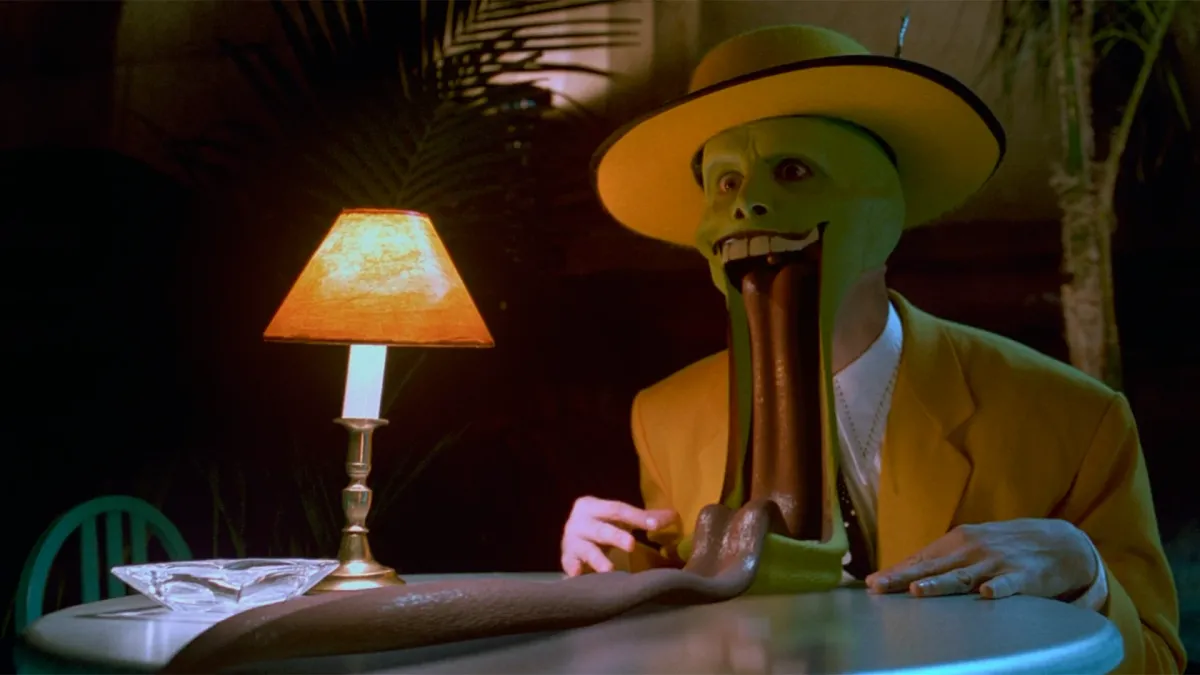
I was 10 when I first saw Jim Carrey’s The Mask. There was this scene where Jim Carrey, transformed into his Mask alter ego, watches Cameron Diaz seductively dance at a nightclub. Carrey, sitting at a table, expresses his infatuation with his usual comedic absurdity, amplified by visual effects: his eyes pop out, his jaw drops, and his head becomes a howling wolf as he watches Diaz dancing to the tune of ‘Gee, Baby, Ain’t I Good to You.’
By then, in 1994, I had seen films like Star Wars and Jurassic Park, but spaceships and dinosaurs never made me question reality. I must have assumed they were toys or drawings. But in The Mask, there I was, watching a person turn into a cartoon in a real-world setting, and it looked far too real for something so impossible. For months, I would sit in front of the TV, pause the VHS, and just draw the frames I was seeing, as if putting them down on paper would let me understand the secrets behind them. My parents, who noticed how often I returned to this particular scene, would tease me about having a crush on Cameron Diaz. I was too young to even understand what they were suggesting.
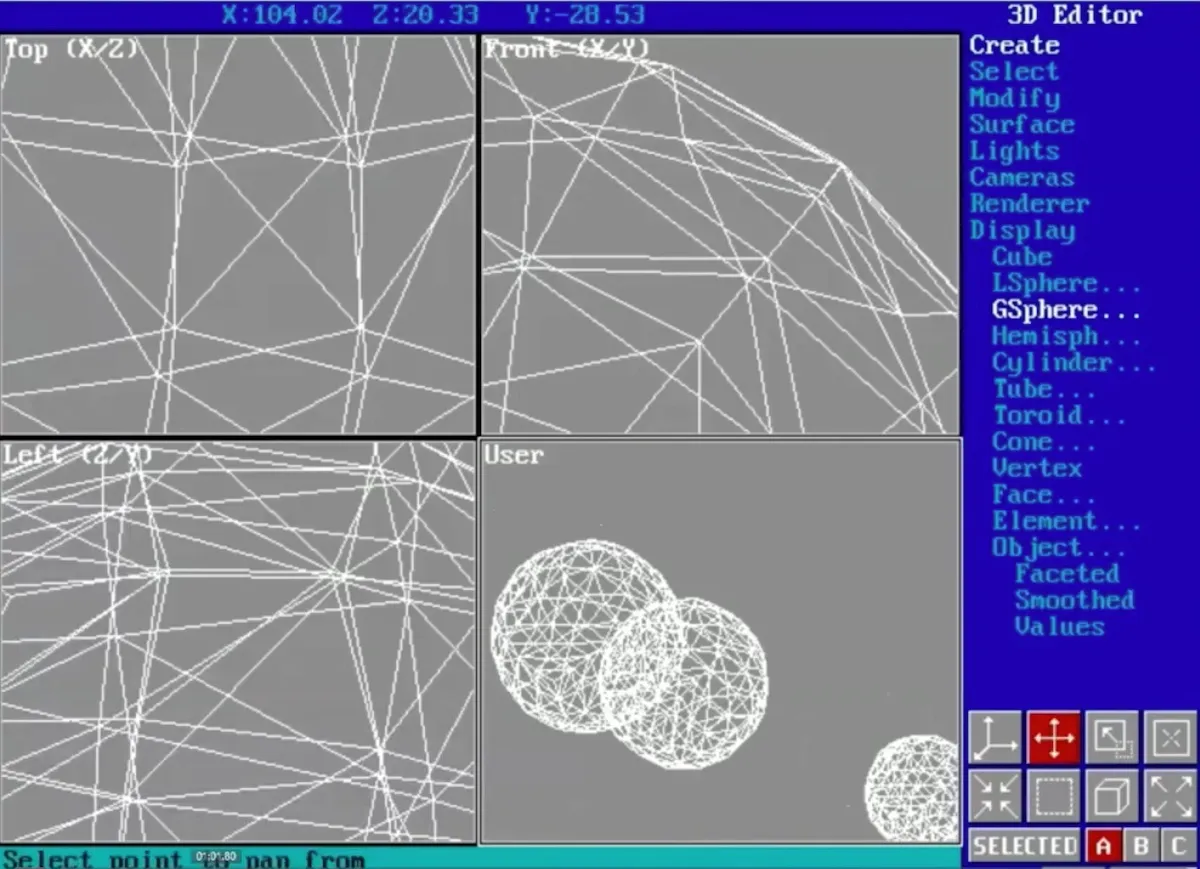
Both my parents were architects, and their influence on me shaped how I see the world at the intersection of engineering and art. I was around 12 when I started learning AutoCAD. And while I tried, really tried, to learn 3D modeling and animation, my attempts ended in one failure after another. I was using 3D Studio Release 4.0 for MS-DOS, and the most I managed to achieve was making a ball bounce as it rolled down a slope. I didn’t have books to learn from at the time, and we wouldn’t get Internet for a couple more years.
That fascination followed me to university in Alexandria, where I studied Computer Engineering but really spent most of my time ignoring the curriculum and pursuing the topics that interested me more. I wanted to study filmmaking or visual effects at the New York Film Academy or Vancouver Film School, but tens of thousands of dollars in tuition and living expenses were so far beyond my family’s reach that I didn’t even ask. I pursued art as a hobby, learning the tools of the trade and working part-time as a news editor for 3Dtotal.com, a prominent 3D modeling and animation community in the early 2000s. Film remained something I could imagine doing, but I had no way to make the kind of things I pictured.
And then, more than 30 years after watching The Mask, I got to tell a story of my own, thanks to generative AI.
The film I finally made, FIFTY, follows a 49-year-old woman who takes a longevity treatment because she needs more time to care for her family. She stays the same age while generations pass around her, and the story eventually reaches Mars.
The choice of story mattered to me. Generative AI tends to be most impressive, and most commonly used, in high-octane action shorts, where it’s harder to spot the slop and there’s less reliance on human acting. The most jaw-dropping videos you could make with generative AI were ones with fast action, little reliance on acting skills, wide shots so you don’t see the small details or subtle emotions, quick cuts so you don’t spot the weird shit going on, and little need to maintain character or environmental continuity. And it works even better if you’re not too strict about how you want the script to evolve, what the characters should say, or how the acting should feel—just let AI hallucinate its way through all of it.
But I don’t like easy, so I decided I wanted to take the opposite path: I would fully control the script and go to war with the hallucinations, poor prompt adherence, and inherent weaknesses of today’s AI models. Stupid, yes. But fun, definitely.
And it was so much fun. It had been years since I’d had this much joy doing anything. After 30 years of wishful thinking, I could suddenly bring almost any idea to life. I wasn’t limited by where the mics would be, how much the lighting setup would cost, whether the lenses I needed for every scene were available, the cost of renting a RED camera rig, the work of screening actors, scheduling them, and coaching them, or the worry that I had to be incredibly precise in pre-production or I’d end up with crap in post. I’ve done all of these things on a smaller scale over the years, but now I could do more, way more, and for less, way less.
The sad part is that I think this is likely the one and only time I’ll get to experience this joy.
I don’t see myself finding another 200 hours for a new film in the next 12 months. And honestly, I think that by the time I feel like making another one, which could be, let’s say, six months from now, there might not even be much left for me to do. Generative AI video is advancing so rapidly that I expect the next generation of models, or the one after that, to allow me to create this same film at a much higher quality in a handful of hours. But I don’t know if I’d enjoy making it that way. The final output was never the goal. It was the micro-decisions of the craft that I liked.
For example, I had two scenes right after each other, but 40 years apart in the narrative. At first, I struggled with how to transition between them. A straight cut would have been too abrupt, but after a few hours of experimentation, I ended up using the shadows of flying cars streaking past one after another to mimic a blink, then matching that to a close-up of her eye blinking in the next scene. I loved making that transition. I don’t think I’ve seen it done before. I felt proud of it. This transition took me over 10 hours to generate, edit, and polish, and cost about 10% of the production budget. I don’t care. It was worth it.
Another scene went the other way. The heroine, distracted during a doctor’s appointment by messages on her phone, is asked by the doctor if he can take her phone away. Watching the full scene, I realized I had forgotten to add a shot of her handing him the phone, so I went back to make it. I had a pretty sweet production system going by then, so all I had to do was tell Codex, “Edit this clip to show that she is handing him the phone.” Codex one-shotted the edit, and it looked amazing. The angle, the close-up, the bokeh: all were perfect. It even added a subtle hesitation as she handed over the phone, followed by a gentle response from the doctor. I didn’t prompt it to do that. It inferred all of that from my prompt and what it knew about the script.
Most shots I had to redo several times, sometimes dozens. I'd curse at Codex. I'd scream in frustration.
But this time, I felt jealous of the machine.
Fuck its loving grace.
In many parts, I was able to let my experience and skill take the lead. But in other parts, I felt like a spectator. I really wish I had directed that phone-handover shot, that I had seen it generated without the hesitation and then decided to add it myself, that I had felt a pride in making it.
I knew it was inevitable that one day you could tell AI to “make me The Fifth Element 2,” and it could perhaps make one better than Luc Besson could (sorry, Luc). But seeing those Will Smith spaghetti clips a few years ago, I thought we were 10 to 20 years away from AI video being indistinguishable from reality. Now, I think we're probably 1 or 2 major model generations away. So... months, possibly.
I’m glad I made FIFTY. For two weeks, I got to do something I’d spent most of my life watching other people do. At 10, I could pause the VHS and try to copy a frame. This time, I could decide what should happen next and work toward seeing it on screen.
My hope is that if the machines soon make filmmaking effortless, they’ll at least leave enough difficulty for us to still feel like we’re making something, not just watching.